
AC Repair or Replace? A 2026 Guide for MA Homes
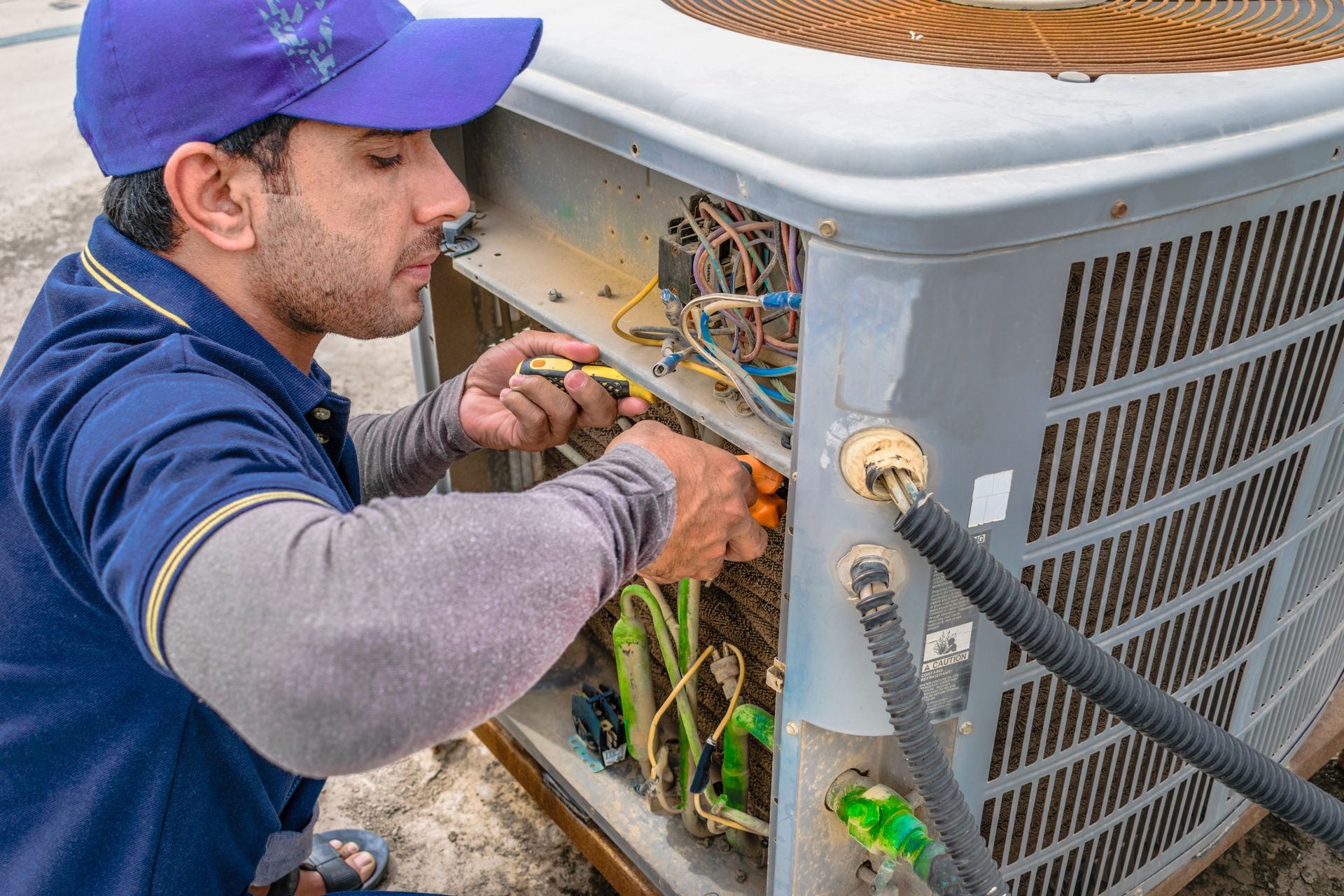
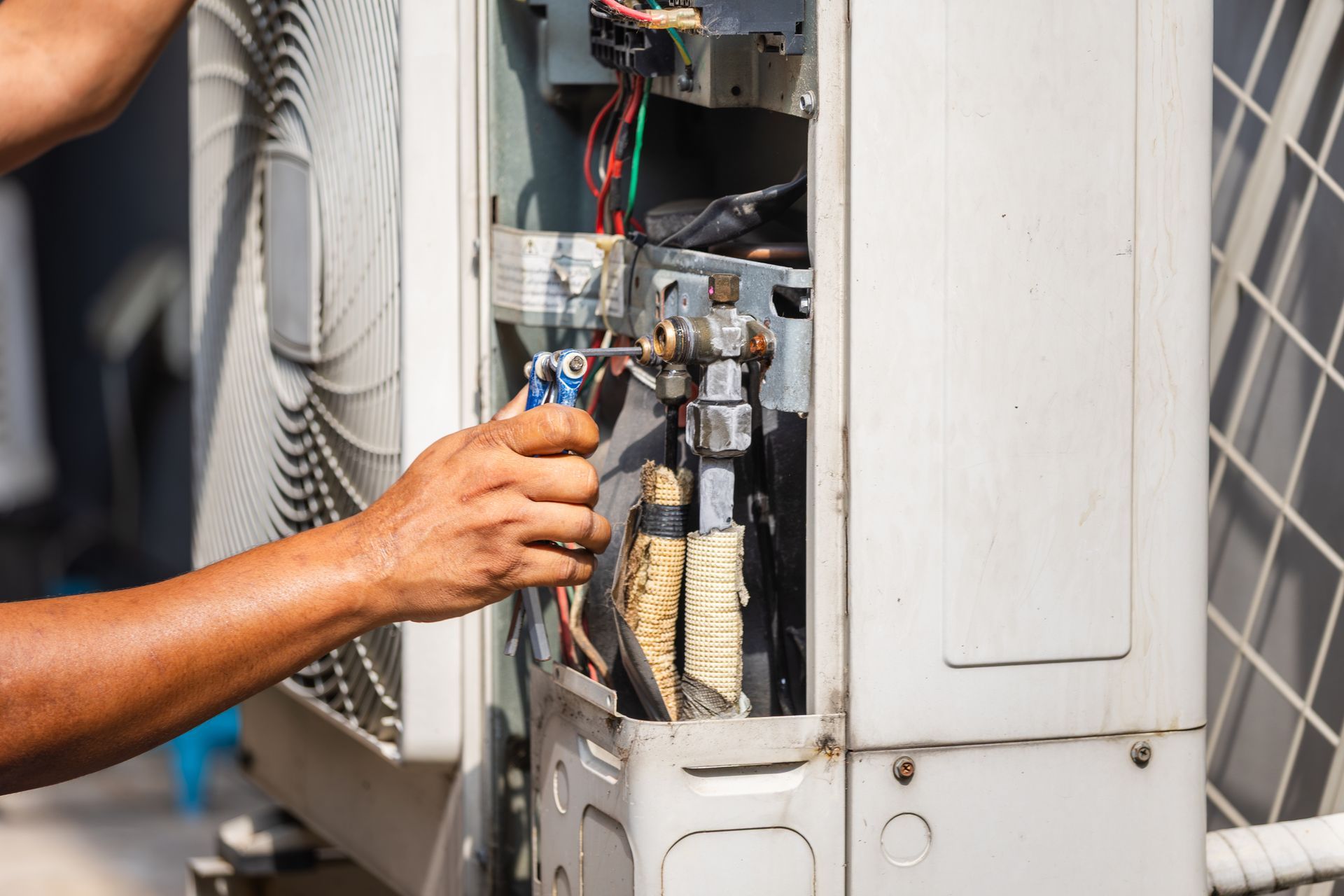
The condenser gave out on the hottest Saturday of the summer, the repair quote came in at $1,400, and now you are standing in the kitchen doing math. Every dollar you put into a 13-year-old air conditioner is a dollar you cannot put toward its replacement, but a new system is a five-figure decision you did not plan to make this year. The AC repair or replace question lands on almost every Massachusetts homeowner eventually, and 2026 has changed the math in ways that catch people off guard. Here is how to work through it without guessing.
Start With the $5,000 Rule
Contractors across the industry use a simple screen: multiply the age of your system by the cost of the repair. If the result is under $5,000, repairing usually makes sense. If it is over, replacement deserves a hard look.
A $400 capacitor on an 8-year-old unit scores 3,200. Repair it and move on. That $1,400 compressor-adjacent repair on a 13-year-old system scores 18,200, and putting that money into equipment with a few years left is like rebuilding the transmission on a car with 190,000 miles. The rule is a screen, not a verdict, but it keeps you honest about sunk costs.
Age Is the Second Filter
Central air conditioners in New England typically last 12 to 15 years, a bit longer with faithful maintenance and a bit shorter for systems that ran undersized or sat through years of clogged filters. Heat pumps and ACs installed near the coast age faster from salt exposure.
Under 10 years old: repair is almost always the answer, and many parts may still fall under the manufacturer's warranty. Between 10 and 15: judge by the repair type. Minor electrical parts, sure. Anything touching the compressor or the coils, be skeptical. Past 15 years: even modest repairs are usually money spent delaying the inevitable, and efficiency losses are quietly costing you every month on top of it.
The 2026 Refrigerant Problem Nobody Warned You About
Here is the piece that has genuinely changed since your system was installed. If your AC went in roughly between 2010 and 2023, it almost certainly runs on R-410A refrigerant. Under the federal AIM Act, R-410A is being phased down, and equipment manufactured after January 1, 2025 uses newer refrigerants like R-32 and R-454B instead.
The practical effect for you: R-410A is getting scarcer and more expensive every season. A refrigerant leak that would have been a few hundred dollars to fix and recharge five years ago can now run well past a thousand once the per-pound price is factored in. If your aging system develops a leak, you are paying premium prices to keep yesterday's refrigerant in yesterday's equipment. For borderline systems, a refrigerant repair is often the event that tips the decision to replace.
What You Gain by Replacing
New equipment is not just a reset on the breakdown clock. Efficiency standards have moved. Systems are now rated in SEER2, a tougher testing standard than the ratings used on older equipment, and a 15-year-old unit is delivering far less cooling per dollar of electricity than a modern system rated at 16 SEER2 or better. With Massachusetts electricity rates among the highest in the country, that gap shows up on every summer bill.
Comfort improves too. Variable-speed systems run long, quiet, steady cycles that hold temperature evenly and strip out far more humidity than the on-off blast of older single-stage equipment. If your house is cool but sticky in August, that is a design limitation of your current system, not a defect. We cover that whole problem separately.
The Massachusetts Twist: Do Not Replace Like for Like Without Checking
In most states, a dead AC gets replaced with another AC. In Massachusetts, that reflex can leave serious money on the table. Replacing a central air conditioner with a cold-climate heat pump gives you high-efficiency cooling in summer plus heating in winter from the same equipment, and it qualifies for Mass Save rebates that a straight AC replacement never will. For homes still heating with oil or propane, the winter operating savings sweeten the deal further, and the cooling side performs just like a modern high-efficiency AC.
Verified as of July 2026, Mass Save offers whole-home heat pump rebates of $2,650 per ton, capped at $8,500 for standard-income households, with enhanced rebates up to $16,000 for income-qualified homeowners, plus a 0 percent HEAT Loan up to $25,000 to spread the cost. Note that new rebate-eligible systems must use the newer refrigerants, since R-410A equipment no longer qualifies in 2026.
Read that $8,500 carefully, because it does not apply to every project. The whole-home rate requires the heat pump to become your only heating source, which means your furnace or boiler comes out. If you keep your existing heating system and the heat pump handles cooling plus some of the heating, you are on the partial-home tier at $1,125 per ton. And if the project displaces no fossil fuel or electric resistance heat at all, a straight heat pump for heat pump swap, for instance, you are looking at the basic tier of $250 per ton capped at $2,500. Three tiers, very different numbers, so ask your contractor which one your project lands in before you build a budget around a headline figure. The full breakdown is in our rebate guide, and the cold-weather performance question is answered in our winter deep dive.
One honest caution: the federal 25C tax credit that used to add up to $2,000 for heat pump installations expired on December 31, 2025. If a website or salesperson promises you a federal tax credit for a 2026 installation, that information is out of date.
Timing Matters More Than You Think
If your system is limping through this summer, late summer and early fall are actually the best time to replace it. Installers have more schedule flexibility once the July rush fades, you are not making a panic decision during a heat wave with the house at 88 degrees, and a heat pump installed in the fall is ready to earn its keep through its first Massachusetts winter. Waiting for the final catastrophic failure means choosing equipment in a hurry, which is exactly how homes end up with oversized, wrong-fit systems.
The Bottom Line
Run the numbers in order. Score the repair against the $5,000 rule, weigh the system's age, and price the repair honestly if refrigerant is involved. For many Massachusetts homeowners in 2026, the AC repair or replace decision tilts toward replacement earlier than it used to, because R-410A repairs keep climbing while heat pump rebates keep the cost of switching down. A borderline call deserves a quote for both paths before you commit.
Frequently Asked Questions
What is the $5,000 rule for AC repair or replacement?
Multiply the system's age in years by the repair cost. Under $5,000, repair is usually the smart move. Over $5,000, replacement generally wins. A $500 repair on a 12-year-old unit scores 6,000, which suggests that money is better applied to new equipment.
How long should a central air conditioner last in Massachusetts?
Typically 12 to 15 years. Regular maintenance, clean filters, and correct sizing stretch that lifespan, while neglect, oversizing, and coastal salt air shorten it. Past 15 years, repairs tend to become a recurring expense rather than a one-time fix.
Is it worth fixing a refrigerant leak on an older AC?
Often not. Systems installed before 2024 mostly use R-410A, which is being phased down and getting more expensive each year. A leak repair plus recharge can exceed a thousand dollars on equipment that may have only a few seasons left, which is why refrigerant leaks frequently trigger the decision to replace.
Should I replace my old AC with a heat pump instead?
In Massachusetts, it is worth pricing. A cold-climate heat pump cools like a high-efficiency AC in summer, heats through the winter, and qualifies for Mass Save rebates of up to $8,500 for standard-income households, verified as of July 2026. A like-for-like AC replacement qualifies for none of that.
Staring at a repair quote and not sure which way to go? LaCroix Heating and Cooling will give you a straight answer, including when a repair is genuinely the smarter move. Serving homeowners across Massachusetts since 2012, we are a Fujitsu Elite Contractor and a Mass Save approved heat pump installer, and every installation carries our 1-year installation warranty plus 12-year manufacturer parts coverage. Call or text (508) 762-9131 for a no-pressure assessment.