
Why Is My AC Not Cooling? A Massachusetts Homeowner's Troubleshooting Guide
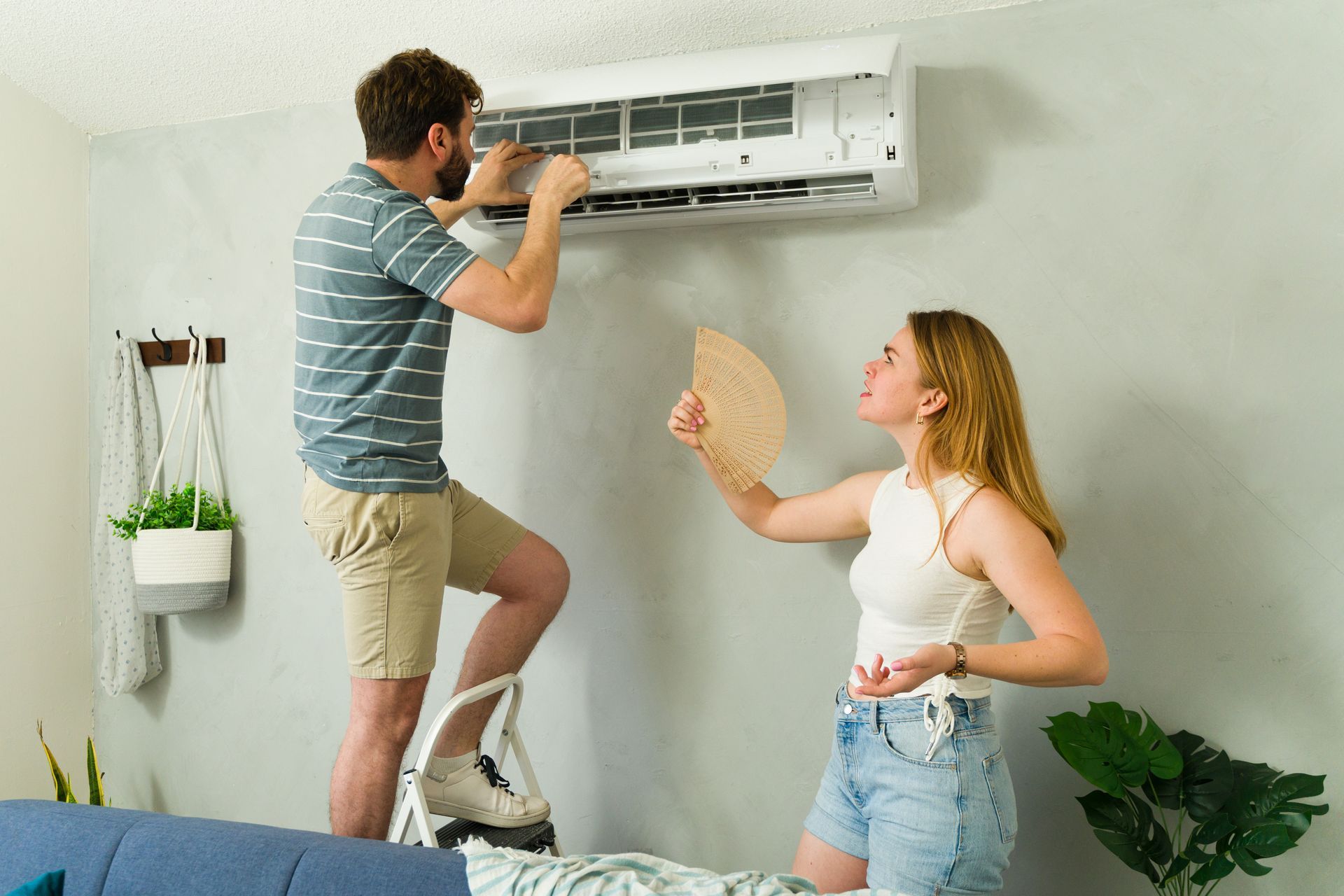
It is 91 degrees outside, the thermostat is set to 72, and your living room still feels like the inside of a greenhouse. If your AC is not cooling during a Massachusetts heat wave, you have plenty of company. The outdoor unit hums away, air moves through the vents, and the house still refuses to cool down. Cooling calls spike every July, and a good share of them trace back to problems you can spot yourself in about twenty minutes. This guide walks through the checks in the order a technician would run them, from the two-minute fixes to the ones that need a licensed pro.
Start With the Thermostat
It sounds too simple, but thermostat problems cause a surprising number of "broken AC" calls. Check three things before you touch anything else.
First, confirm the system is set to COOL, not just ON or AUTO for the fan. Second, look at the fan setting itself. If the fan is set to ON, the blower runs constantly, even between cooling cycles, and pushes room-temperature air through the vents. That makes it feel like the AC has stopped cooling when it is actually just resting between cycles. Switch the fan to AUTO so it only runs when the system is actively cooling.
Third, if your thermostat runs on batteries, swap them. A dying battery can cause erratic behavior that looks exactly like a failing system. If you have a smart thermostat, check that a schedule or eco mode has not quietly raised your setpoint for the afternoon.
Check the Air Filter
A clogged filter is the single most common reason an AC runs but barely cools. Your system needs to pull a steady volume of air across the indoor coil to absorb heat from your house. When the filter is caked with dust and pet hair, airflow drops, the coil gets starved, and the system limps along blowing weak, barely cool air.
Pull the filter out and hold it up to a light. If you cannot see light through it, replace it. During heavy summer use, a 1-inch filter may need changing every 30 to 60 days, especially in homes with pets. This one habit prevents more cooling problems than any other maintenance task, and it costs less than a pizza.
Inspect the Outdoor Unit
Head outside and look at the condenser, the big unit sitting beside your house. Its job is to dump the heat pulled from your home into the outdoor air, and it cannot do that if it is smothered.
Look for shrubs, tall grass, fence panels, or stored items crowding the unit. You want at least two feet of clear space on all sides. Check the coil fins for a mat of cottonwood fluff, grass clippings, or dirt. In early summer, cottonwood season across Massachusetts can coat a condenser in days.
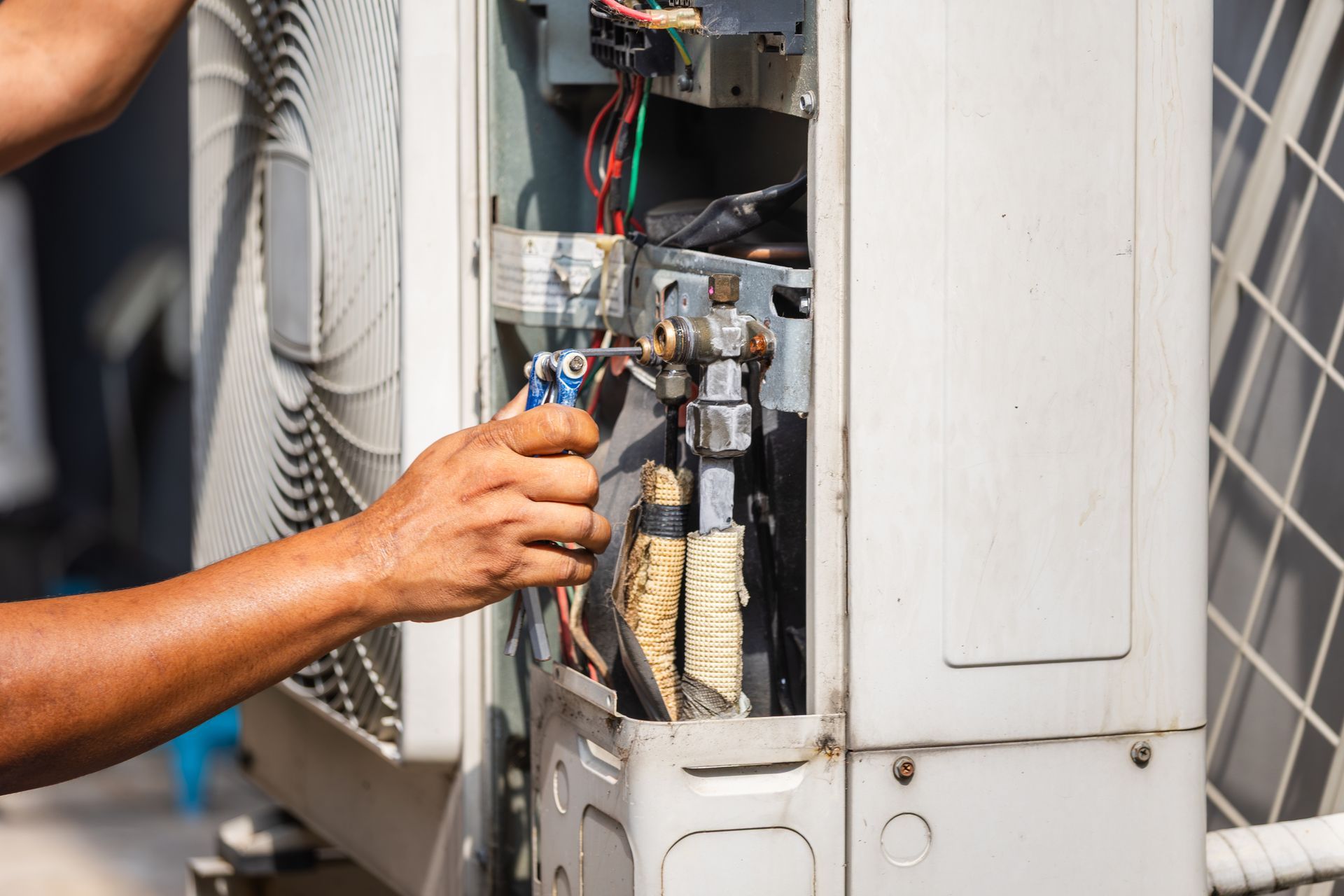
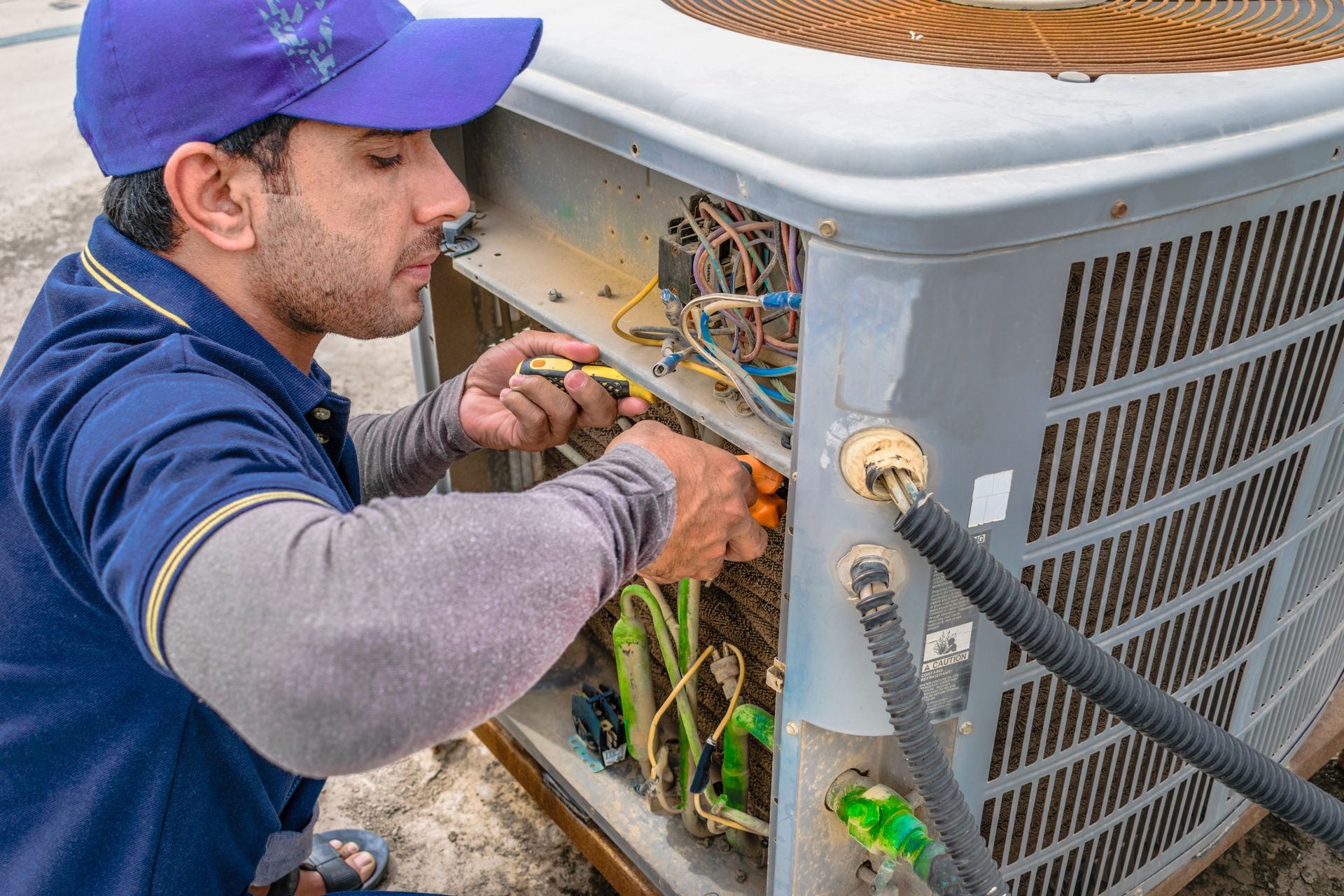
If the fins look dirty, shut off power at the disconnect box, then rinse the coil gently with a garden hose from the inside out. Skip the pressure washer, which bends fins and makes things worse. If the outdoor fan is not spinning at all while the system calls for cooling, stop there and call a technician, because that points to a failed capacitor or motor.
Watch for a Frozen Evaporator Coil
If the airflow from your vents has gone from strong to weak, and you see frost on the copper refrigerant lines near the indoor unit, your evaporator coil has likely iced over. It seems backwards, but ice on an air conditioner means something is wrong, not that it is working extra hard.
Coils freeze when airflow is restricted, usually from that dirty filter, or when refrigerant is low. Turn the system off at the thermostat and run only the fan for a few hours to thaw the coil. Replace the filter, then restart. If the ice comes back within a day or two, you are probably looking at a refrigerant leak, and that is a job for a licensed technician.
Low Refrigerant Means a Leak
Refrigerant is not like gas in a car. Your AC does not consume it, so a system that is low on refrigerant has a leak somewhere. Topping it off without fixing the leak just delays the same problem and wastes money.
The classic signs are warm air from the vents, ice on the refrigerant lines, and a hissing or bubbling sound near the indoor or outdoor unit. Only an EPA-certified technician can legally handle refrigerant, so this is where DIY ends.
One thing Massachusetts homeowners should know in 2026: if your system runs on R-410A, the refrigerant used in most units installed over the past 15 years, repair costs are climbing. R-410A is being phased down under the federal AIM Act, and new equipment manufactured after January 1, 2025 uses newer refrigerants like R-32 and R-454B instead. Supplies of R-410A are tightening, and a major leak repair plus a recharge on an older system can now run well over a thousand dollars. That math matters when you are deciding what to fix.
Ductwork Can Undo Everything
Plenty of Massachusetts homes, from Springfield colonials to Boston-area capes, have ducts running through unconditioned attics and basements. If those ducts leak or have lost their insulation, you can lose a big share of your cooling before the air ever reaches your rooms.
The telltale sign is a system that cools some rooms fine while others stay stubbornly warm, or upstairs bedrooms that never catch up with the first floor. A technician can test duct leakage and pressure-check the system. Sometimes sealing a few joints restores capacity you thought the equipment had lost.
When Cooling Trouble Points to a Bigger Decision
If your air conditioner is more than 10 to 12 years old, breaks down repeatedly, or needs an expensive R-410A repair, it is worth stepping back before you sink more money into it. A rule of thumb many contractors use: multiply the repair quote by the age of the system, and if the result tops $5,000, replacement usually wins.
Massachusetts homeowners also have an option most other states do not. Replacing an aging central AC with a cold-climate heat pump gets you high-efficiency cooling in summer and heating in winter from the same equipment, and Mass Save rebates can take thousands off the installed price. We cover the numbers in detail in our rebate guide and the equipment side in our product deep dive.
The Bottom Line
Most of the time, an AC not cooling comes down to a handful of usual suspects: a fan set to ON, a suffocating filter, a dirty condenser, a frozen coil, or a refrigerant leak. Run through the first four yourself. If the problem survives your checklist, or your system is old enough that repairs feel like a subscription, bring in a pro before the next heat wave hits.
Frequently Asked Questions
Why is my AC running but not lowering the temperature?
The most common causes are a clogged air filter, a fan set to ON instead of AUTO, a dirty or blocked outdoor condenser, a frozen evaporator coil, or low refrigerant from a leak. Start with the filter and thermostat settings, since those are free fixes you can make in minutes.
Can a dirty air filter really stop my AC from cooling?
Yes. A badly clogged filter chokes off airflow across the indoor coil, which cuts cooling capacity, can freeze the coil solid, and strains the blower motor. During heavy summer use, check a 1-inch filter every 30 to 60 days.
Why does fixing a refrigerant leak cost so much more than it used to?
Most systems installed in the last 15 years use R-410A, which is being phased down under federal rules. As supplies shrink, the per-pound price keeps rising, so a leak repair plus a full recharge on an older system can exceed a thousand dollars. On an aging unit, that repair bill often justifies looking at replacement instead.
When should I call a professional instead of troubleshooting myself?
Call a pro if the outdoor fan will not spin, ice keeps returning after you replace the filter, you hear hissing near the refrigerant lines, breakers keep tripping, or the system is short cycling. Those symptoms point to electrical, refrigerant, or sizing problems that need licensed hands.
Still sweating it out after running through the checklist? If your AC is not cooling and you want it diagnosed right the first time, LaCroix Heating and Cooling has served homeowners across Massachusetts since 2012. We are a Fujitsu Elite Contractor and a Mass Save approved heat pump installer, and we back our work with a 1-year installation warranty alongside 12-year manufacturer parts coverage. Call or text (508) 762-9131 to schedule your visit.