Midea EVOX G3 vs LG: Comparing Two Central Heat Pumps for Massachusetts
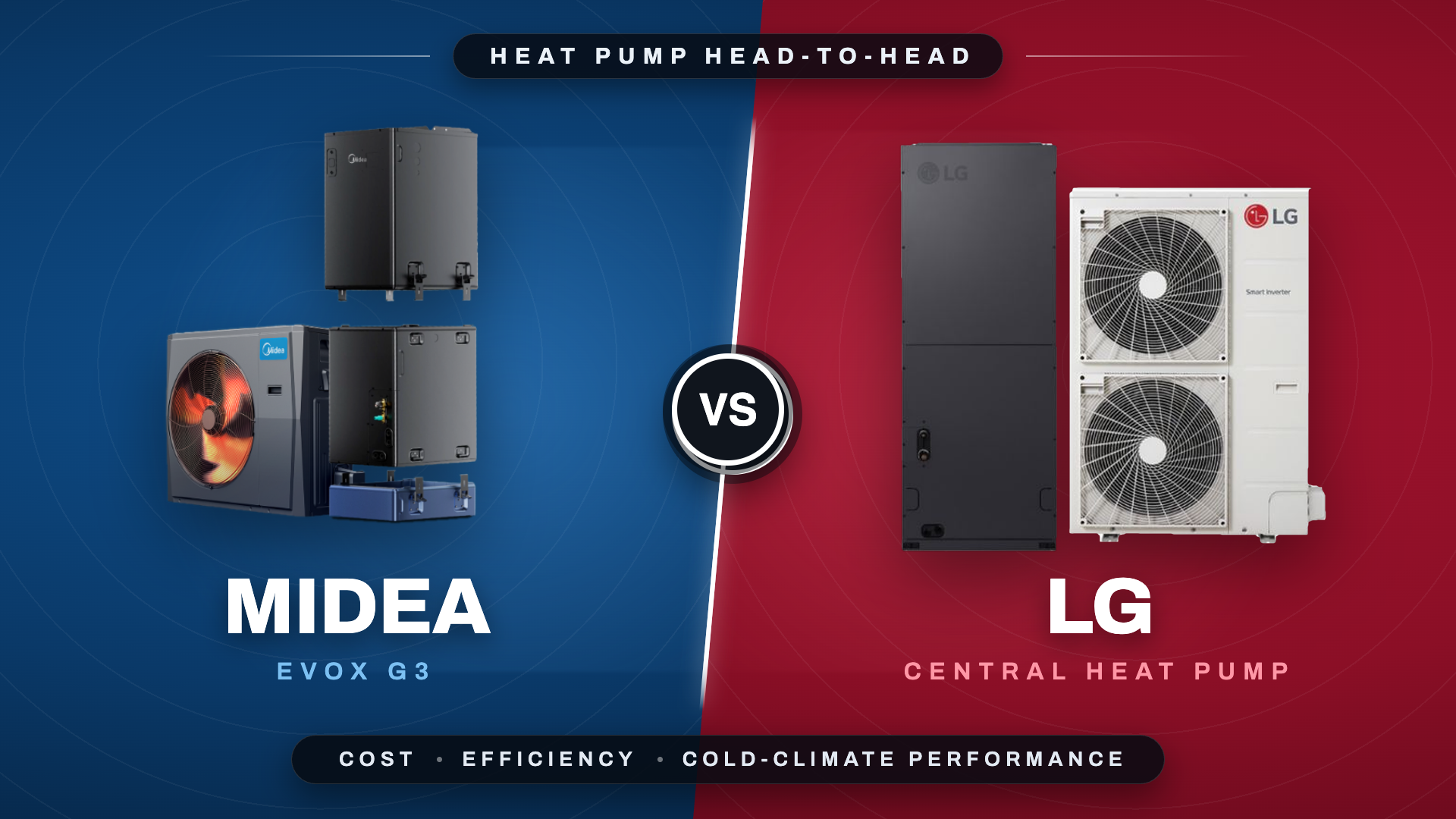
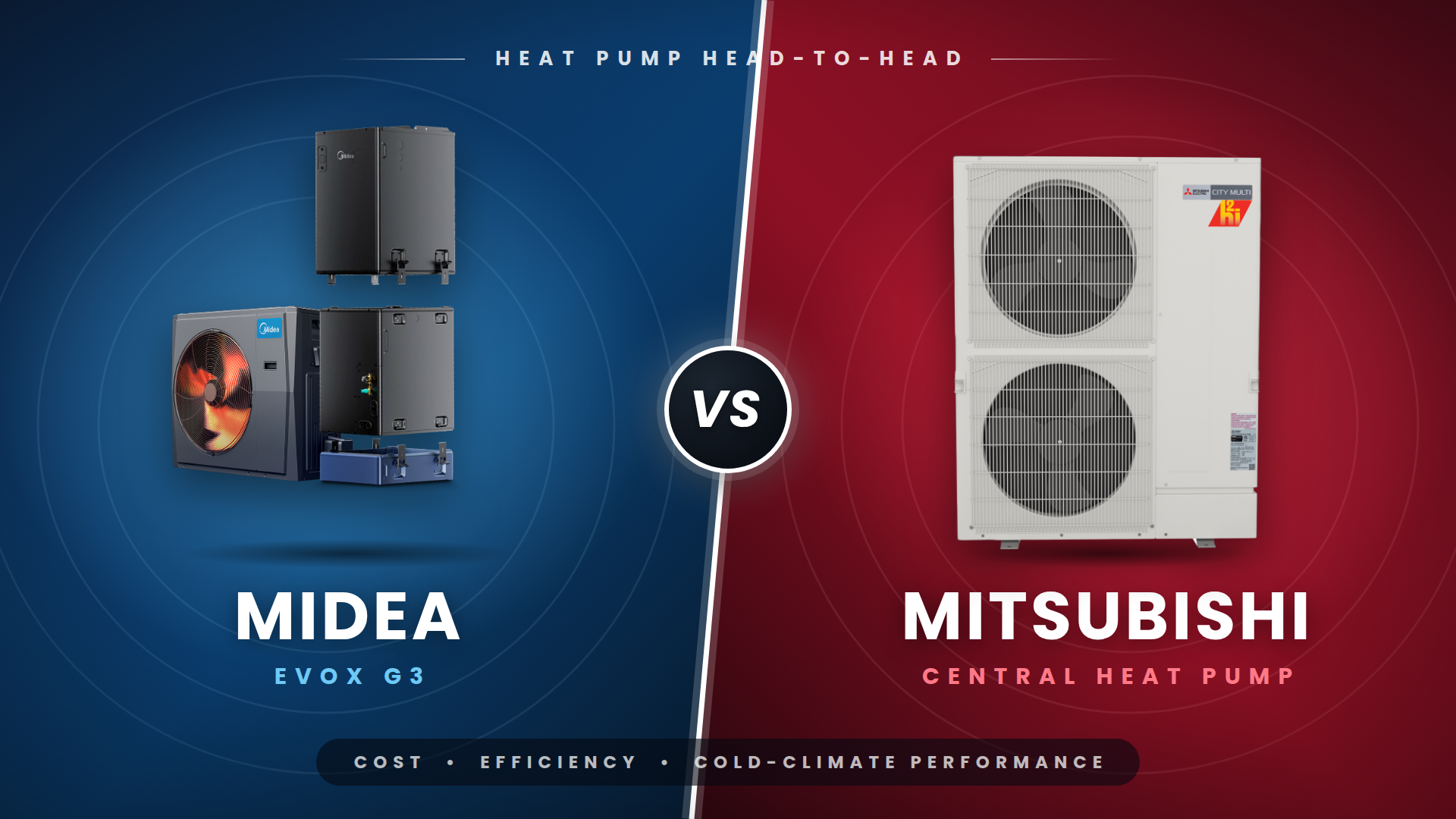
Most Massachusetts homeowners shopping for a central heat pump end up with a shortlist of two or three brands, and lately the Midea EVOX G3 vs LG matchup shows up often. Both companies build serious cold-climate equipment. Both have current models that qualify for Mass Save rebates in 2026. And both will heat your home through a New England February without an oil furnace propping them up. The differences are real, though, and they sit in places the sales brochures tend to skip past. Here is what separates them.
Two Different Answers on Refrigerant
This is the most concrete difference between the two, and it has consequences.
The Midea EVOX G3 uses R-454B. LG's current high-efficiency ducted systems in the LGRED line use R-32. Both are next-generation low-impact refrigerants, both replaced the older R-410A that the federal AIM Act is phasing down, and both satisfy the Mass Save requirement that took effect January 1, 2026.
So neither choice costs you a rebate. What differs is the supply picture. R-454B and R-32 have moved through the transition at different speeds, and availability has been uneven across the industry as manufacturers retooled. For a homeowner, the practical question is not which chemistry is superior in the abstract but whether your installer can readily source the refrigerant for service years from now. Ask your contractor directly what they stock and how they handle service calls on each.
One thing to watch on any quote from any brand: if a system still uses R-410A, it was removed from the Mass Save Heat Pump Qualified Products List as of January 1, 2026 and earns no rebate, verified as of August 2026.
Efficiency, Compared Fairly
LG's ducted LGRED systems publish cooling efficiency ratings that generally climb into the 17 to 19 SEER2 range depending on tonnage, with the larger capacities toward the upper end. The Midea EVOX G3 is rated at up to 19.0 SEER2 with 12.5 EER2, and up to 10.8 HSPF2 on the heating side.
Those ranges overlap considerably, which is the honest takeaway. Neither system is going to embarrass the other on a spec sheet. What you should do is ignore the brand-level ranges entirely and compare the two exact models in your two quotes, because efficiency varies more within a product line by tonnage than it does between these brands.
Two cautions apply to both brands. First, the most impressive published figures usually come from ductless equipment rather than ducted, so if you are replacing a furnace and using existing ductwork, only the ducted ratings are relevant. Second, published HSPF2 numbers typically reflect Region IV, the standard climate region for most of the country. Massachusetts sits in Region V, where the same equipment rates lower. Midea publishes both for the EVOX G3, at 10.8 for Region IV and 8.8 for Region V. Ask for the Region V figure on any quote.
Summer Performance
Since most people shopping in August care about the next six weeks before they care about January, start here.
The EVOX G3 publishes an unusual specification for a central heat pump: up to 100 percent cooling output at 110 degrees Fahrenheit, with operation to 122 degrees. LG does not publish a comparable headline figure for its ducted LGRED line. That absence is not evidence of weaker equipment, since manufacturers choose which specifications to feature, but if extreme heat performance is documented on one quote and not the other, that is worth asking about.
On rated efficiency the two overlap, as covered above. Look at EER2 alongside SEER2 when you compare. SEER2 is a seasonal average while EER2 measures efficiency at one hot condition, so EER2 is the better predictor of how a system behaves on the worst afternoon of the summer. The EVOX G3 publishes 12.5 EER2.
Winter Capacity in Short
Both platforms are built for New England, and the published claims differ in a way that is easy to miss. LG states that select models with LGRED technology provide 100 percent heating at 5 degrees Fahrenheit and reliable operation down to minus 13. The EVOX G3 is rated to deliver 100 percent of its heating output at minus 13, with a COP of up to 1.9 there and 2.14 at 5 degrees. Note LG's phrase "select models," which means the claim does not apply uniformly across the line. Holding full capacity at a temperature and operating at it are different specifications, so confirm which one your quote describes.
Installation Is the Underrated Difference
Here is where the EVOX G3 has a genuine structural advantage for retrofit projects.
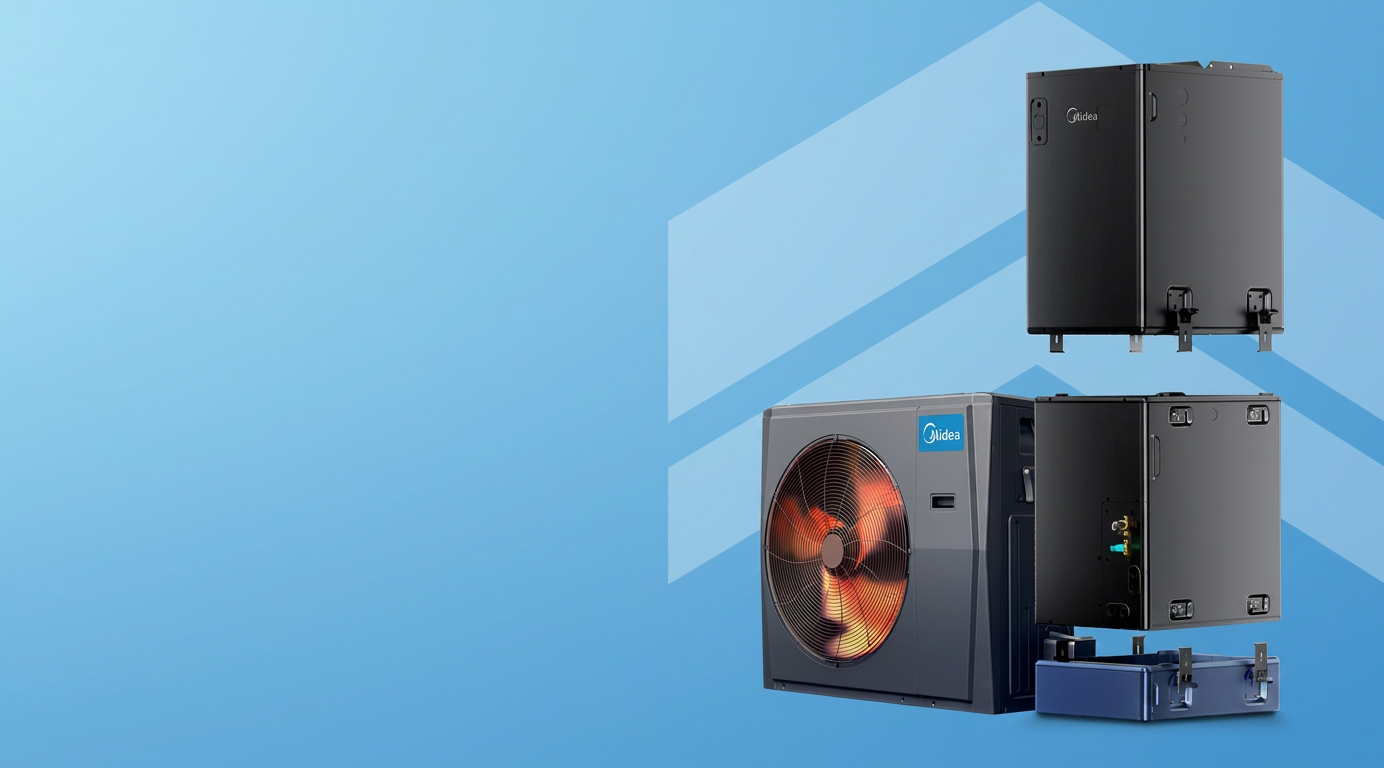
Midea designed the EVOX G3 as a direct drop-in replacement for a gas furnace. It matches the width of a typical furnace cabinet and uses adaptive voltage to work across different home electrical configurations. Its modular latching design means an installer can bring it into a cramped basement in pieces instead of maneuvering one large cabinet down a narrow stairwell.
None of that shows up on an efficiency chart, but it shows up on your invoice and in how long your house is without heat during the changeover. For a Massachusetts home with an aging furnace and existing ductwork, that retrofit-first engineering is a real advantage.
LG's ducted systems are multi-positional, which gives installers useful flexibility in how the air handler is oriented in basements, attics, and closets. That flexibility matters in older housing stock with awkward mechanical spaces, and plenty of Massachusetts homes qualify.
Sizing Matters More Than Brand
It is worth saying clearly, because it is the single most common expensive mistake in this category. An oversized heat pump of any brand will short cycle, dehumidify poorly in summer, and wear its compressor faster. An undersized one will lean on backup heat and drive up your winter bills.
The EVOX G3 covers 1.5 to 5 tons. LG's single-zone ducted LGRED systems run 1.5 to 4 tons, which covers most Massachusetts homes but can leave larger or leakier houses needing a different configuration. The question is whether your contractor performs an actual Manual J heating load calculation on your house or estimates from square footage. That decision will affect your comfort and your energy bills far more than choosing between these two logos.
Making the Call
If your project is a furnace replacement in a home with existing ductwork, the EVOX G3's drop-in design, strong cooling efficiency, and R-454B eligibility make a strong case. If your mechanical space demands unusual air handler positioning, or your installer has deep experience and parts access with LG specifically, that experience carries real weight, because a well-installed good system beats a poorly installed great one every time.
Whichever way the Midea EVOX G3 vs LG decision lands, verify the exact model appears on the Mass Save Qualified Products List and that your contractor belongs to the Heat Pump Installer Network. Those two checks protect thousands of dollars in rebate money.
Frequently Asked Questions
Is R-454B or R-32 better for a heat pump?
Both are next-generation low-impact refrigerants that replaced R-410A, and both meet Mass Save's 2026 eligibility requirement, so neither costs you rebate money. The Midea EVOX G3 uses R-454B and LG's current LGRED ducted systems use R-32. The more useful question for a homeowner is which refrigerant your installer stocks and services readily in your area.
Which is more efficient, the Midea EVOX G3 or an LG heat pump?
Their published ranges overlap. The EVOX G3 is rated up to 19.0 SEER2 and up to 10.8 HSPF2, while LG's ducted systems generally publish cooling ratings in the 17 to 19 SEER2 range depending on capacity. Efficiency varies more by tonnage within each line than it does between the brands, so compare the two specific models quoted rather than the brands.
Do LG and Midea heat pumps both qualify for Mass Save rebates?
Both manufacturers offer current models that meet the 2026 refrigerant requirement. Eligibility is determined model by model, so the specific unit must appear on the Mass Save Heat Pump Qualified Products List, carry ENERGY STAR Cold Climate certification, and be installed by a Heat Pump Installer Network contractor.
Can either brand replace my gas furnace directly?
The Midea EVOX G3 was specifically engineered for this, matching a typical furnace cabinet width and using adaptive voltage so it drops into an existing setup with less modification. LG's multi-positional ducted air handlers also retrofit well, though the changeover details depend on your mechanical space. A site visit is the only way to know what your basement actually requires.
Not sure which system suits your house, your ductwork, and your budget? LaCroix Heating and Cooling has installed heat pumps across Massachusetts since 2012, and we will size your system properly and show you the real numbers for the exact models we quote. We are a Mass Save approved heat pump installer, and our work comes with a 1-year installation warranty plus 12-year manufacturer parts coverage. Call or text (508) 762-9131 to talk it through.